
Foundation repair in Rockwall TX - a steady slab and doors that close right
Doors sticking or cracks running from the corners of your walls? We find out what's moving and set your slab on solid support.
Is my foundation moving, and what will it take to fix it?
Foundation repair in Rockwall, TX steadies a slab that's sunk unevenly, usually by setting piers, columns that go deep into the ground, under the low sections so they're held up instead of riding on the soil.
You're probably here because a door started sticking or a crack opened up near a corner, and you want to know if it's the foundation. Usually it's the slab moving, but not every crack needs piers, and I'll tell you straight which one you've got.
The price mostly turns on how many piers your slab needs and which kind, plus whether an engineer's evaluation comes first. The schedule depends on that evaluation, the permit check for your address and how soon the crew can get there. After I've looked at your house, you get a written plan and price, so the number you see is for your job.
- We read the signs inside and out, from sticking doors to cracked brick, to find where it dropped.
- Piers go under the low sections, and how many depends on how far the slab has settled.
- Brick and mortar that cracked from the movement get fixed after the slab is held up, not before.
What happens after you call us about your foundation?
I handle foundation calls myself, from the first look to the final walk-through. Here's how a job usually goes, so you know who you'll see and what you'll have in hand at each step.
You call and I answer
When you call (972) 961-1232, I pick up and we set a time for me to come out. Jot down which doors stick and where the cracks are, because that tells me where to start looking.
I come out and look
I walk the house inside and out and give you a straight read, including whether an engineer's evaluation should come before any piers. You get a written plan and price, so you know what you're paying for before you decide anything.
We check permits and schedule
If you say go, we check with the city or county office for your address, and when a permit's needed we handle the application and inspections. Then we put your job on the calendar.
I work alongside our crew
I'm on site with our crew while the piers go in and the ground gets backfilled. Before we pack up, we walk the finished job with you so you can see exactly what was done.
Masonry and concrete work, from footings to finished brick
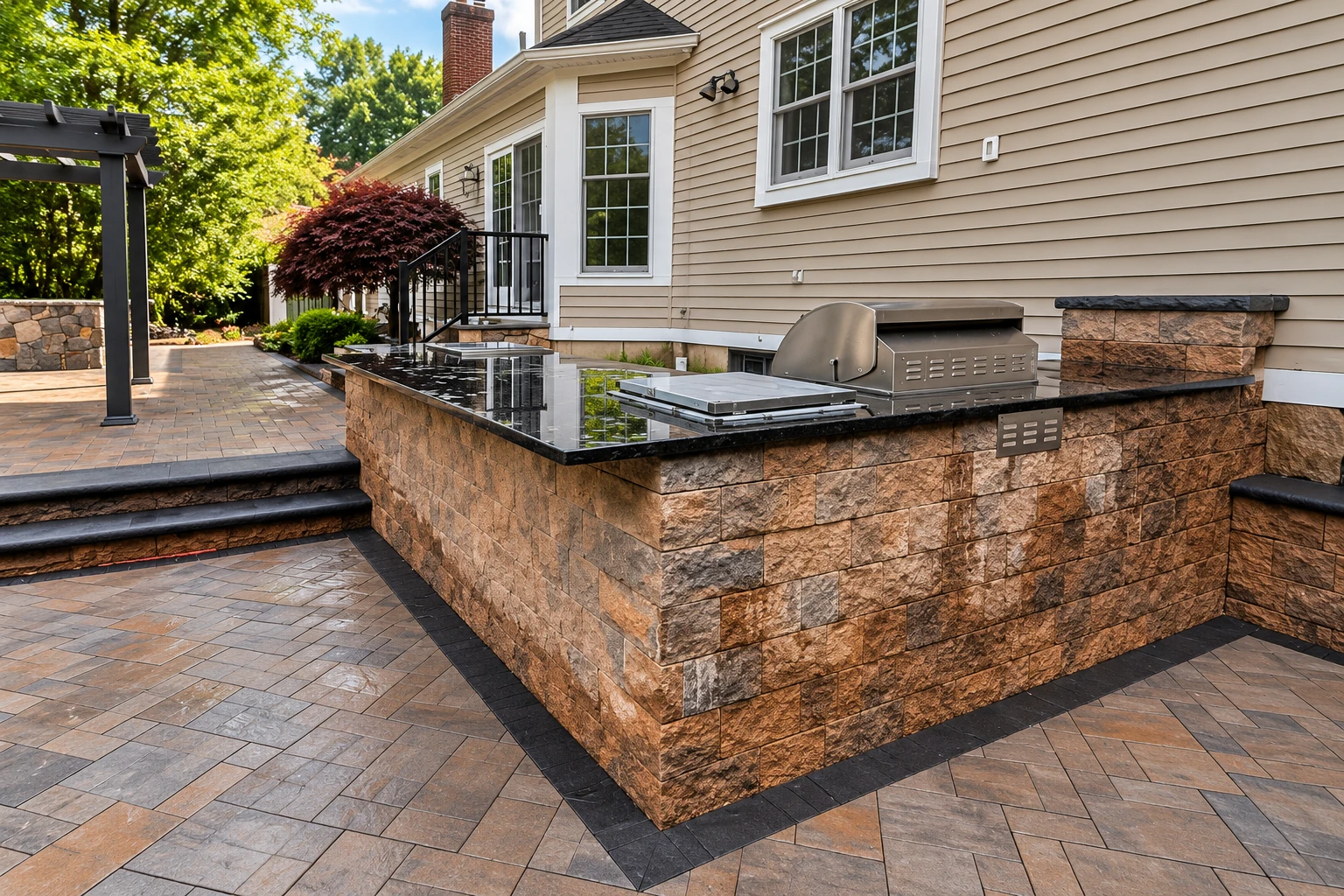
These photos show the kind of masonry and concrete work our trade does, from the ground up to the finished wall. Tap any photo to see it larger.
Tan stone steps cross a landscaped garden from a flagstone patio, bordered by gravel and shrubs.
Gray interlocking pavers cover a broad driveway beside a house, bordered by dark edging and a concrete curb.
Curving gray paver driveway with pale stone bands, bordered by manicured lawn, trees and shrubs.
Stone retaining wall and broad steps with inset lights lead up to a paved patio beside a house at dusk.
Fresh dark asphalt driveway bordered by rough stone blocks, shrubs and a concrete front stoop.
Curved stone walkway borders a mulched garden bed beside a house, with a low stacked-stone retaining wall and pale stone cap.
Get a straight read on your foundation from the owner
Tell us which doors stick and where the cracks are, and we'll reply within one business day to set up a free on-site estimate. I come out myself, and there's no obligation to go ahead.
(972) 961-1232Questions about foundation repair, cost and evaluations in Rockwall
These are questions homeowners around Rockwall ask before they call about a foundation. If yours isn't here, call and ask, because a quick look at your house usually answers more than any article can.
How much does foundation repair cost in Rockwall, TX?
Residential foundation repair in the Dallas area usually runs about $3,500 to $7,000 per job, going by one 2026 Dallas cost guide. That's what the market usually charges, not our price, and your written estimate after I look at the house gives you your own number.
How do I tell if my foundation is moving?
You can usually tell from inside, where foundation movement shows up as doors that stick or cracks in the walls, mostly at the corners. Cracks that close up after rain still point to movement, since dry clay that gets moisture again can lift the slab and close some of them. Outside, pull back plants or mulch where the soil meets the foundation, and if there's a gap, the ground there needs water.
What does a Level A foundation inspection cover in Texas?
A Level A inspection is what Texas engineering guidance calls a "report of first impressions," a first look rather than a full study. Some homeowners have complained to the state engineering board after missing that, so before you hire an engineer, ask which level of evaluation you're paying for. It's also worth asking whether leaking plumbing or landscaping plays a part, since both can affect how a foundation behaves.
Do I need a licensed engineer for foundation repair in Texas?
Sometimes, and the board answers that question with a flowchart you can check for your own job. The board calls the flowchart guidance only and says local codes may be more restrictive, which is one more reason we check with the office for your address before any work starts.
How do I keep my foundation from moving again after repair?
Keep the soil moisture as even as you can on all sides of the house, without overwatering, which engineering guidance for Texas homes says may help. General advice from a 2015 county extension column warns that watering only the front yard while the back dries out can crack brick and pull doors out of line. AgriLife Extension suggests a drip zone about 8 to 18 inches from the foundation, and in a drought, check Rockwall's Drought and Water Emergency Plans, since some cities still allow foundation watering under a no outdoor watering rule.
Should I cut down a tree that's close to my foundation?
Not always, because trees and large shrubs near a foundation may shrink the soil under it, but taking them out may make that soil heave, swelling back up under the slab. The same engineering guidance says pruning may be a prudent alternative to removal. If you've got a big tree near the house, point it out when I come look.