
Retaining wall construction in Rockwall TX - a wall that stays put in clay
Slope washing out or an old wall leaning in? We build block walls with the base and drainage that keep them standing.
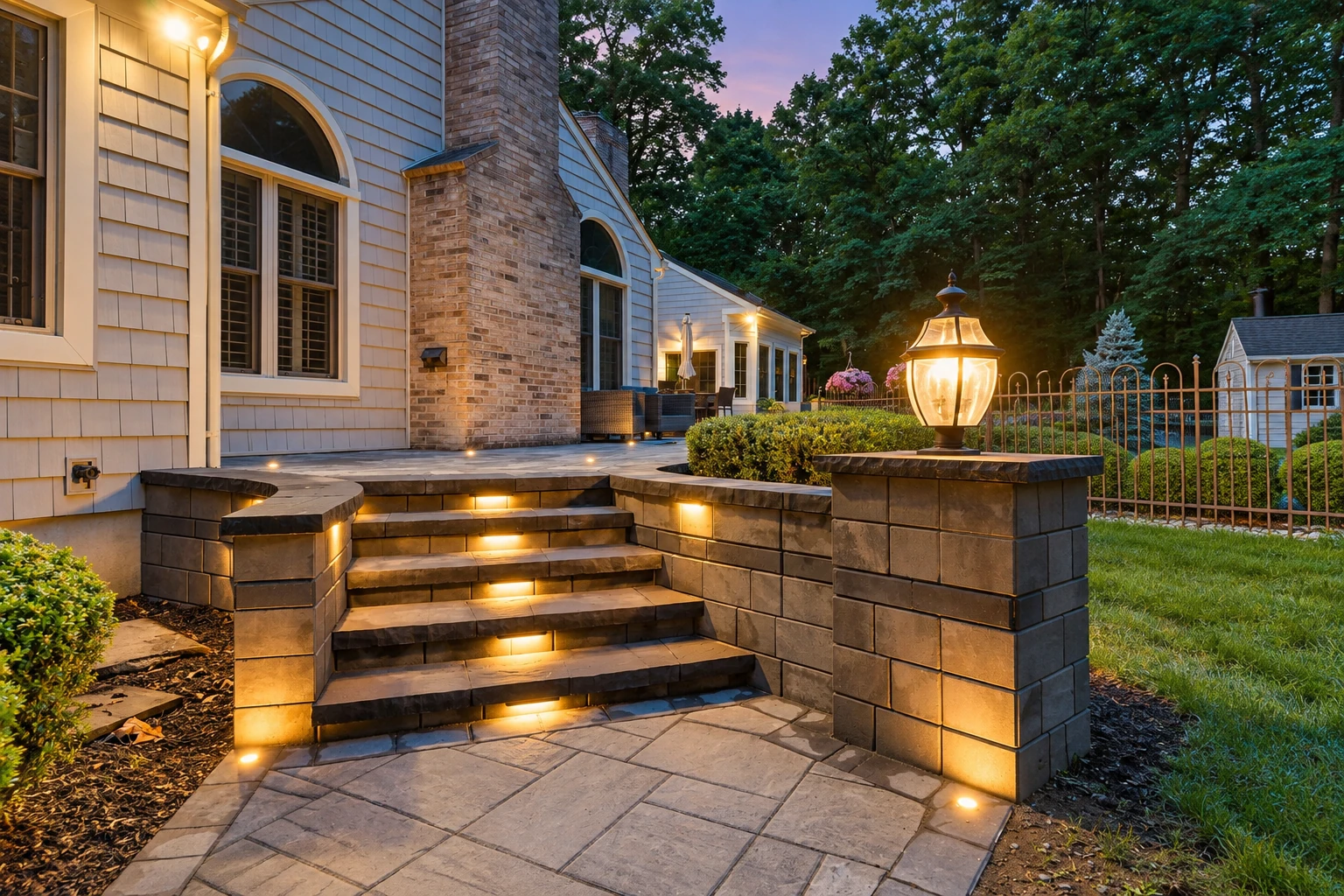
What does a retaining wall in Rockwall need to stay standing?
Retaining wall construction in Rockwall, TX is building a wall that holds a slope in place so your yard stops washing out. On most homes here that's a segmental wall, a stack of factory-made concrete blocks set without mortar that holds the soil back mostly by its own weight.
Most calls start with a yard that's sliding, a bed that washes out every storm or an old timber wall leaning in. Rockwall, like the rest of North Texas, sits on expansive black clay that swells when it rains and shrinks hard in a drought, and that movement leans on a wall, so one area contractor says a wall here needs more base, reinforcement and drainage than one in sandy or rocky ground.
The price mostly moves with the wall's height and length, how much soil we dig out and replace, and how much gravel and drainage the slope needs. The schedule turns mostly on the weather and how much digging the ground calls for. You get your own figures in a written plan and price after I see the slope. We're fully licensed and insured, and I'd rather tell you a wall isn't needed than sell you one.
- New block walls for sloped yards, raised beds and flat spots for a patio or lawn.
- Tearing out a leaning or rotted wall and rebuilding it on a proper base.
- Gravel and a drain behind the wall, so rain drains out instead of pushing on it.
What happens when you call about a retaining wall in Rockwall?
I answer the phone and I'm the one who comes out, so you talk to the same person from the first call to the final walk. Here's how a wall goes from a sliding slope to finished.
Call and tell me about it
You call (972) 961-1232 and I pick up. Tell me the wall's rough length and height and where water sits, and we'll set a time for me to come look.
I look at the slope
I walk the yard myself, check the soil and where the water runs, and tell you plainly what the wall needs, or that you don't need one. You get a written plan and price before anything starts, so you know the cost up front.
We build from the base
Once you say go, we put the job on the calendar. I'm on site with our crew while the work gets done, and the digging, base and drain go in before the blocks go up.
Walk the finished wall together
When the last block is set, we clean up and walk the finished wall with you before we pack up. You'll see where the water goes, not just the block face.
Block walls, stone and brick work from the mason's trade
These photos show the kind of block, stone and brick work masons build on slopes and in yards. They're examples of the trade to help you picture options, not pictures of our own jobs.
Outdoor kitchen with a stone veneer island, black countertop, and built-in stainless steel grill on a paved patio.
Stone outdoor kitchen and fireplace beneath a covered patio, with string lights, seating, and a swimming pool nearby.
A stone outdoor fireplace and masonry counter anchor a paved patio with a round metal dining table.
Stone steps climb through a landscaped garden, bordered by large natural boulders, flowering plants, and evergreen trees.
Curved stone walkway borders a mulched garden bed beside a house, with a low stacked-stone retaining wall and pale stone cap.
Outdoor kitchen with a stainless steel grill, stone veneer counters and wall, and stainless drawers beneath a covered porch.
Get a straight read and a written price on your wall
Send the wall's rough length and height and photos of the slope or wet spots, and we'll reply within one business day. I'll come out for a free on-site estimate, and there's no obligation.
(972) 961-1232Retaining wall questions we hear from Rockwall homeowners
These are the questions people ask me most while we're standing at the bottom of a slope. The answers come from what block makers and area builders say, and what we do about it.
How much does a retaining wall cost in the Dallas area?
A retaining wall in the Dallas area usually costs about $20 to $40 per square foot of wall face, which is the front you see, length times height. That's the area's going rate, not our quote, and you'll get your own number in writing after I see the slope.
How long does a retaining wall last in clay soil?
One Dallas-area contractor says a wall with a proper base and real drainage should last 30 years or more. The same builder sees walls with no drainage or real base start leaning in as little as three to five years in this clay, which is why we spend our time on the parts behind the blocks.
Is treated timber a good choice for a retaining wall in Rockwall?
Usually not, if you want the wall to last in this clay. One area contractor says timber is the cheapest per foot, but moisture and rot hold it to roughly 10 to 15 years here, while concrete block resists cracking and doesn't splinter or rot. Block costs more up front, and I'd pick it for the longer run.
Does my retaining wall need a drain pipe?
Yes, if it's a reinforced wall, a gravity wall over 4 feet tall or a yard that drains poorly, because the block maker's install guide requires one in those cases. If your yard stays soggy or you're planning a taller wall, expect a pipe in the plan, and I'll tell you on site which case yours is.
Do I need an engineer for a retaining wall in Texas?
An industry install guide says a qualified engineer should evaluate site-specific conditions, and in Texas an engineer is someone licensed by the state to practice engineering. When I see your slope, I'll tell you straight whether I think it calls for one.
What causes a retaining wall to lean?
Usually it's what's under and behind the wall, not the blocks. One area contractor says the failures they get called to fix are almost never the blocks themselves, which points to a thin base or water with nowhere to go once the clay swells. If yours is leaning, call and I'll come look at what's actually failed.